Season 8 Episode 1- “Written by Heart’s Blood: Mapping the Kantsedikas Family Letters from the Blavatnik Archive”with Amber Nickell, Chelsea Kiefer, Sarah Keiss, and David Solis

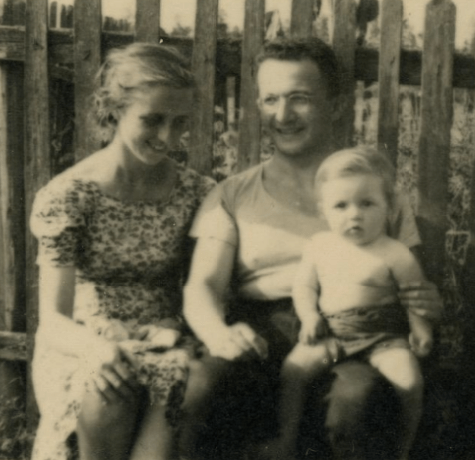
Sheva, Soloman, and Basenka Kantsedikas

In the first episode of season 8, Hollie visits with some familiar friends of the podcast: Dr. Amber Nickell, Sarah Keiss, Chelsea Kiefer, and David Solis. They discuss their digital humanities project, “Written by Heart’s Blood: Mapping the Kantsedikas Family Letters from the Blavatnik Archive.” This project, available here, involved collecting data from a collection of letters between a Soviet Jewish couple during World War II. The Kantsedikas Family Letters Collection at Blavatnik provides a window into the experience of this couple as they navigated the war, love, parenthood, seperation, and various struggles.

You can find this episode on Apple Podcasts, SpotifyAmazon Music, or any of the major podcast platforms. Make sure to subscribe so you never miss an episode. While you’re there, give us a review. Let us know what you like and share widely!
Season 7, Episode 4-“Nisei Women in Japanese Internment” with Grace McCord

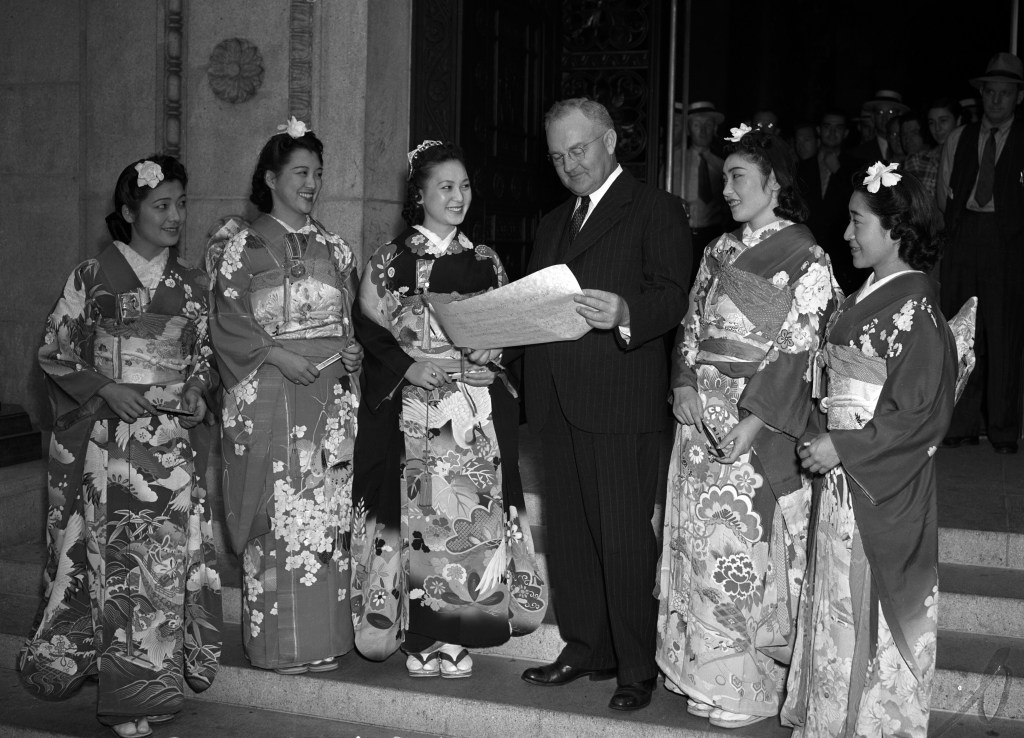
Nisei Week beauty competion

Junior history minor Grace McCord joins Hollie to discuss Nisei Women in Japanese Internnment camps in the US during WWII. Second-generation Japanease -American women, or Nisei women, faced significant challenges during WWII in Japanese Internment camps, but their experiences also foreced a shift in the structure of their families, allowing them some measure of independence from traditional expectations. Through education, vocational training, and military volunteer opportunities, Nisei women displayed agency and resilence.

You can find this episode on Apple Podcasts, SpotifyAmazon Music, or any of the major podcast platforms. Make sure to subscribe so you never miss an episode. While you’re there, give us a review. Let us know what you like and share widely!
Selected Bibliography:

Ito, Leslie. “Japanese American Women and the Student Relocation Movement, 1942-1945.” Frontiers: A Journal of Women Studies 21, no. 3 (2000): 1–24. https://doi.org/10.2307/3347107.

Kurose, Akiko. “Akiko Kurose Interview I.” Interview by Matt Emery, Densho, July 17, 1997. https://ddr.densho.org/media/ddr-densho-1000/ddr-densho-1000-41-transcript-3d1725e567.htm.

Sakahara, Toru and Sakahara, Kiyo. “Toru Sakahara – Kiyo Sakahara Interview I.” Interview by Dee Goto. Densho, Feburary 24, 2024. https://ddr.densho.org/media/ddr-densho-1000/ddr-densho-1000-76-transcript-cd0479f05b.htm.

Suzuki Ichino, Mary. “Mary Suzuki Ichino Interview.” Interview by Richard Potashin. Densho, July 17, 2008. https://ddr.densho.org/media/ddr-manz-1/ddr-manz-1-51-transcript-b6b177d9c1.htm.

Are you interested in a history degree? We have online and on campus B.A. programs and we also have online and on campus M.A. programs in history or public history. Learn more at https://www.fhsu.edu/history/academic-program

S2, E2- “Soundscapes of Polish Ghettos” with Matt Davenport

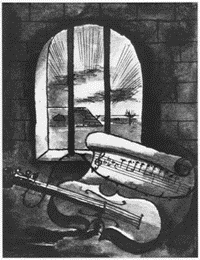
“Still Life of a Violin and Sheet of Music Behind Prison Bars by Bedrich Fritta,” 1943, United States Holocaust Memorial Museum

Episode 2 features another previous guest of Victor E, Matt Davenport. In this episode he visits with Hollie about his research titled “Music, Silence, and Violence: Soundscapes and Collective Memory of Polish Ghettos.” Matt unpacks the ways in which music, silence, and the sounds of violence shaped everyday interactions of Jewish people in the ghettos as well as the role of the soundscapes in the way in which survivors remember the ghettos.

Matt’s previous episode on Victor E.’s first season also discusses the Holocaust, with a focus on the Holocaust in the East. Check that out here: https://wordpress.com/post/victorehistory.com/71

You can find Matt’s episodes on Apple Podcasts, SpotifyAmazon Music, or any of the major podcast platforms. Make sure to subscribe so you never miss an episode. While you’re there, give us a review. Let us know what you like and share widely!

Selected Bibliography:

Bruk, Selene. “Oral History Interview with Selene Bruk.” Interviewed by Arnold Band. March 6, 1983. The Jeff and Toby Herr Oral History Archive. United States Holocaust Memorial Museum. https://collections.ushmm.org/search/catalog/irn503582.

Carolyn Birdsall, Nazi Soundscapes: Sound, Technology and Urban Space in Germany, 1933-1945, Amsterdam: Amsterdam University Press, 2012.

Flam, Gila. Singing for Survival: Songs of the Lodz Ghetto 1940-45. Chicago: University of Illinois Press, 1992.

Nowak, Anja. Violent Space: The Jewish Ghetto in Warsaw. Bloomington: Indiana University Press, 2023. 

Songs mentioned in the episode:

Our Town is Burning

Es Brent

Are you interested in a history degree? We have online and on campus B.A. programs and we also have online and on campus M.A. programs in history or public history. Learn more at https://www.fhsu.edu/history/academic-program

S5, E7- “The Nazi Olympics” with Keith Kuehn

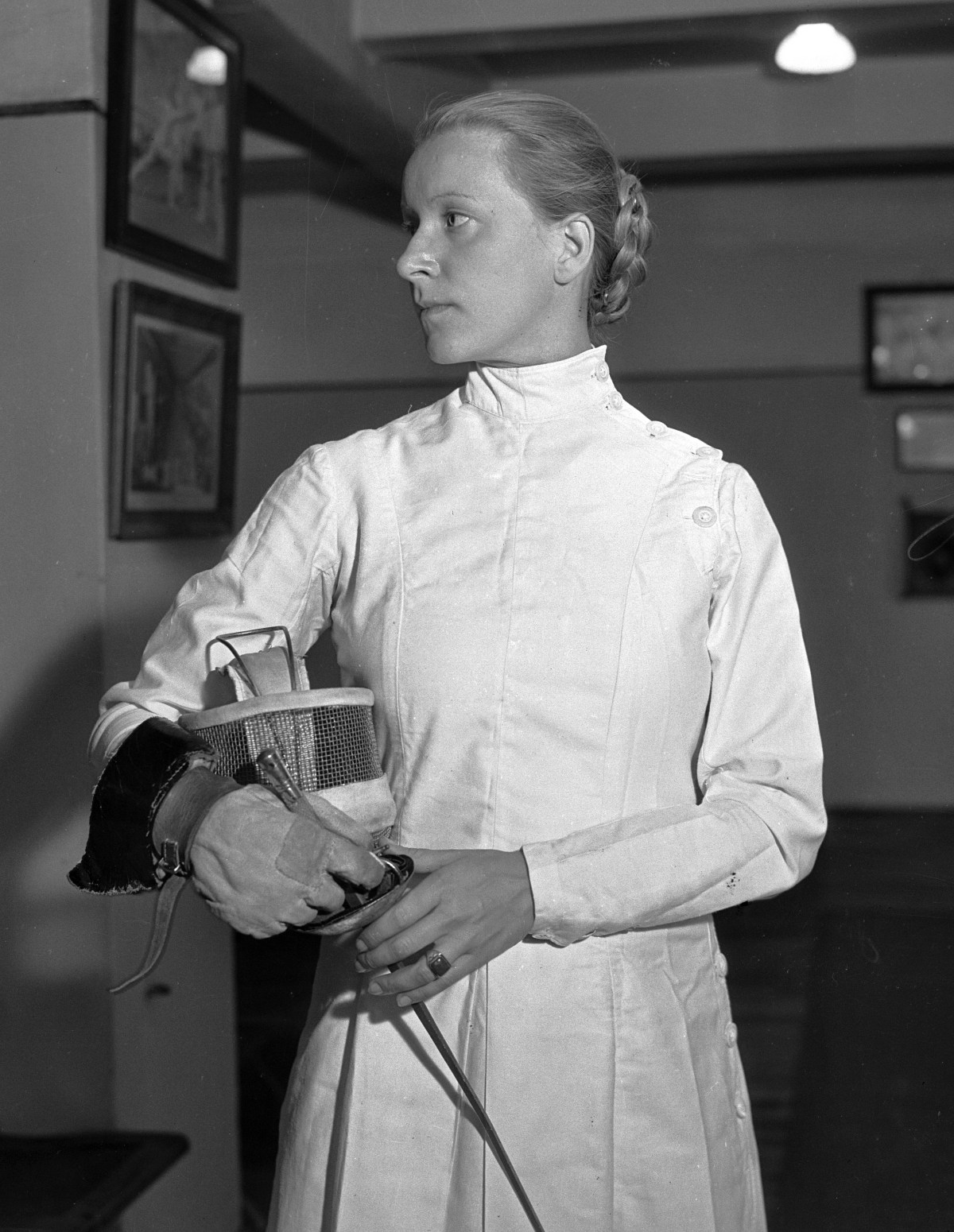
Helene Mayer, Olympic Fencer, c. 1936.
Helene Mayer, c1936” by Los Angeles Times is licensed under CC BY 4.0.

In episode 7 of this season, senior history major Keith Kuehn visits with Hollie about the 1936 Olympics in Berlin, or “The Nazi Olympics.” Helene Mayer (pictured above) was a German Jewish fencer who competed and won a silver for Germany. Keith unpacks the use of German propaganda, including film and television as well as the German discrimination against Jews and how this played out during the 1936 games.

Keith also briefly discusses his pet Eugene, who became the mascot for Ms. Marquess’s Women in American History course. Eugene, a female tortoise, got dressed up based on the theme of each week. Here she is as Eugene the Riveter.

Eugene Kuehn, tortoise extrordinaire

You can find this episode on Apple Podcasts, SpotifyAmazon Music, or any of the major podcast platforms. Make sure to subscribe so you never miss an episode. While you’re there, give us a review. Let us know what you like and share widely!

Selected Bibliography:

Birchall, Frederick T. “Goebbels Denies Intent to Use Games for Propaganda Purposes.” New York Times. July 31, 1936. accessed November 20, 2023. https://www.nytimes.com/1936/07/31/archives/goebbels-denies-intent-to-use-games-for-propaganda-purposes.html?searchResultPosition=20.

Kline, Christopher. “The Olympic Torch Relay’s Surprising Origins.” History. A&E Television Networks, published May 17, 2012. accessed December 2, 2023.

Pinkhasov, Seymon, dir. What If? The Helene Mayer Story. 2008; Hesse, Germany: 2021. stream. https://www.youtube.com/watch?v=ZIUs_ceGVYw.

Riefenstahl, Leni, dir. Olympia. April 20, 1938. https://www.youtube.com/watch?v=s23Q01qvdGs&t=1458s.

Riefenstahl, Leni. Leni Riefenstahl Interview, 1964. NDR-Nordschau. 1964. Accessed November 20, 2023. https://www.youtube.com/watch?v=L1zdzmxpif8&t=1s.

Are you interested in a history degree? We have online and on campus B.A. programs and we also have online and on campus M.A. programs in history or public history. Learn more at https://www.fhsu.edu/history/academic-program

Season 5 Episode 6- “Futball: A Voice for the Silenced in Nazi Germany” with David Solis

In episode 6, senior history major at FHSU, David Solis, joins Hollie Marquess to discuss the role of football (or soccer) in Nazi Germany. David explores the complex nature of resistance, both with individuals and whole soccer clubs, during the Nazi regime in World War II.

You can find this episode on Apple Podcasts, SpotifyAmazon Music, or any of the major podcast platforms. Make sure to subscribe so you never miss an episode. While you’re there, give us a review. Let us know what you like and share widely!

Selected Bibliography:

German Officials in Kiev. A flyer that advertised the rematch between Flakelf and FC Start. Summer 1942. From the DW, https://www.dw.com/en/death-match-in-the-shadow-of-war/a-16000159.

Arolsen Archives and Borussia Dortmund. Football Players in Focus: Educational Materials on Sports, Persecution, and Remembrance. Germany: Arolsen Archives, 2021. https://arolsen-archives.org/content/uploads/football-players-in-focus.pdf.

Simpson, Kevin E. Soccer Under the Swastika: Stories of Survival and Resistance during the Holocaust. Maryland: Roman & Littlefield, 2016. Accessed through ProQuest https://ebookcentral-proquest-com.ezproxy.fhsu.edu/lib/fhsu/reader.action?docID=4525022.

Are you interested in a history degree? We have online and on campus B.A. programs and we also have online and on campus M.A. programs in history or public history. We also have a new accelerated MA program. Learn more at https://www.fhsu.edu/history/academic-program

S5 E5- “Through Hell to the Midwest: Mapping Holocaust Survival in Kansas City” with Hollie Marquess, Amber Nickell, and Sarah Keiss

Midwest Center for Holocaust Education Monument in Kansas City

In this episode, Hollie Marquess is joined by Amber Nickell and Sarah Keiss. The three of them discuss their research project, “Through Hell to the Midwest,” which maps Holocaust survival using arcGIS and StoryMaps. Hollie, Amber, and Sarah discuss how they used oral history testimony from the Fortunoff Archives to trace Holocaust survivors from birth, through the Holocaust, and to their new lives in the Kansas City area. For more information on these survivors, visit:

You can find this episode on Apple Podcasts, SpotifyAmazon Music, or any of the major podcast platforms. Make sure to subscribe so you never miss an episode. While you’re there, give us a review. Let us know what you like and share widely!

Are you interested in a history degree? We have online and on campus B.A. programs and we also have online and on campus M.A. programs in history or public history. Learn more at https://www.fhsu.edu/history/academic-program

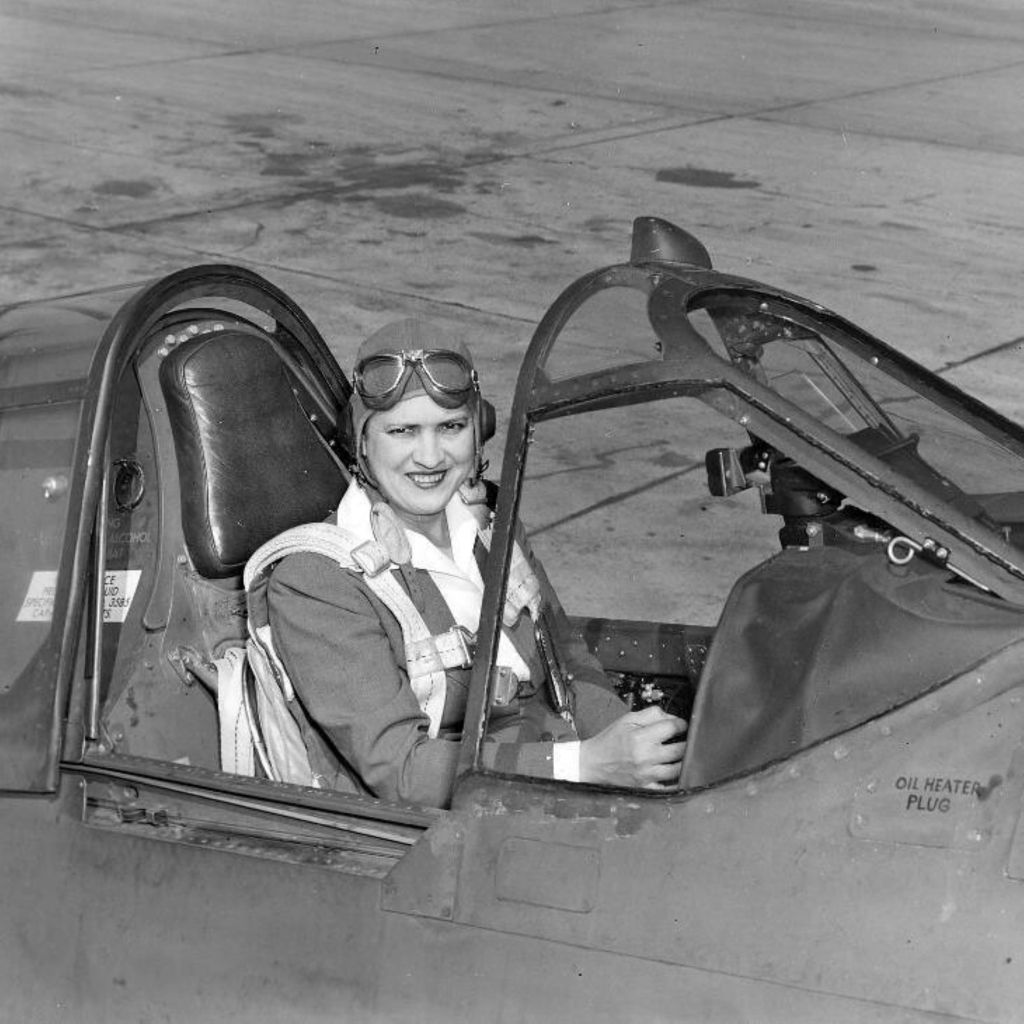
S 4, E3 “Jacqueline Cochran and the creation of the Women’s Flying Training Detachment” with Kayla Nelson

Kayla Nelson, graduate Public History major at FHSU, joins Hollie to discuss female aviation pioneer Jacqueline Cochran, who advocated that women had women pilots had the skills and abilities to fly for the war effort during WWII. She formed the Women Flying Training Detachment and eventually headed the Women’s Airforce Service Pilots (WASPs).

You can find this episode on Apple Podcasts, SpotifyAmazon Music, or any of the major podcast platforms. Make sure to subscribe so you never miss an episode.

Selected Bibliography:

Cochran, Jacqueline. “American Women Pilots” 3 September 1943, Box 14, Women Airforce Service Pilots (WASP) Series, Eisenhower Presidential Library. https://www.eisenhowerlibrary.gov/sites/default/files/file/cochran_BinderJJ.pdf.

Landdeck, Katherine Sharp. The Women with Silver Wings: The Inspiring True Story of the Women Airforce Service Pilots of World War II. New York: Crown, 2021.

Smith, Hannah. “The Women Airforce Service Pilots of WWII: A Tactical Necessity with Strategic Implications.” Air & Space Power History 69, no. 1 (2022). https://www.afhistory.org/wp-content/uploads/2022/05/Spring2022Issue_All-1.pdf.

Olds, Robert. “To all women holders of licenses,” 29 July 1941, Women Airforce Service Pilots (WASP) Series, Box 2, Subseries I: Pre-WASP Files, Eisenhower Presidential Library. https://www.eisenhowerlibrary.gov/sites/default/files/file/cochran_BinderA.pdf.

War Department. “Jacqueline Cochran Named Director of Women’s Flying Training in Army,” 14 September 1942, Women Airforce Service Pilots (WASP) Series, Box 2, Subseries I: Pre-WASP Files, Eisenhower Presidential Library. https://www.eisenhowerlibrary.gov/sites/default/files/file/cochran_BinderCC.pdf.

Are you interested in a history degree? We have online and on campus B.A. programs and we also have online and on campus M.A. programs in history or public history. Learn more at https://www.fhsu.edu/history/academic-programs/         

S3 Episode 7- Poland 2023- Students discuss study abroad

Students and Ms. Marquess in downtown Warsaw

In our final episode of this semester, Dr. Guha is joined by Dr. Nickell and Hollie Marquess, along with three students who went on their study abroad to Poland trip in March 2023. History majors Alex White, Sarah Keiss, and Ashlyn Carlson discuss their experience of learning about Jewish life before, during, and after the Holocaust in Poland. Of course, we also discuss pierogis!

Dr. Nickell and a peirogi

You can find this episode on Apple Podcasts, SpotifyAmazon Music, or any of the major podcast platforms. Make sure to subscribe so you never miss an episode.

FHSU students at Cafe Bergson in Oswiecim

Are you interested in a history degree? We have online and on campus B.A. programs and we also have online and on campus M.A. programs in history or public history. Learn more at https://www.fhsu.edu/history/academic-programs/         

Season 3, Episode 1- Zoot Suits, Las Pachucas, and the Sleepy Lagoon Murder with Lizbeth Guardado and David Solis

Image is of US Navy members with sticks and bats during the Zoot Suit Riots

In this episode, sophomore history education majors Lizbeth Guardado and David Solis join Hollie Marquess to discuss the Zoot Suit Riots, the Sleeply Lagoon Murder, and a lesser known group involved, Las Pachucas. 

David Solis discusses Las Pachucas and, as promised, here is an image of their signature hairdo.

Lizbeth’s research focused on the Sleepy Lagoon Murder and trial as a precursor to the Zoot Suit Riots.

You can find this episode on Apple Podcasts, SpotifyAmazon Music, or any of the major podcast platforms. Make sure to subscribe so you never miss an episode.

Selected Bibliography:

The Sleepy Lagoon Murder Case: Race and Discrimination and Mexican American Rights – Mark A. Weitz, 2010

The Zoot Suit Riots: The Psychology of Symbolic Annihilation -Mauricio Mazon, 1984 

Murder at the Sleepy Lagoon: Zoot Suits, Race, and Riot in Wartime L.A. – Eduardo Pagan, 2011

From Coveralls to Zoot Suits: The Lives of Mexican American Women on the World War II Home Front.– Elizabeth Escobedo, 2013

The Woman in the Zoot Suit: Gender, Nationalism, and The Cultural Politics of Memory– Catherine Ramirez, 2009

https://www.pbs.org/wgbh/americanexperience/films/zoot/

Are you interested in a history degree? We have online and on campus B.A. programs and we also have online and on campus M.A. programs in history or public history. Learn more at https://www.fhsu.edu/history/academic-programs/

Episode 2- “Holocaust of the East: Judeo-Bolshevism and Auschwitz Syndrome” with Matt Davenport

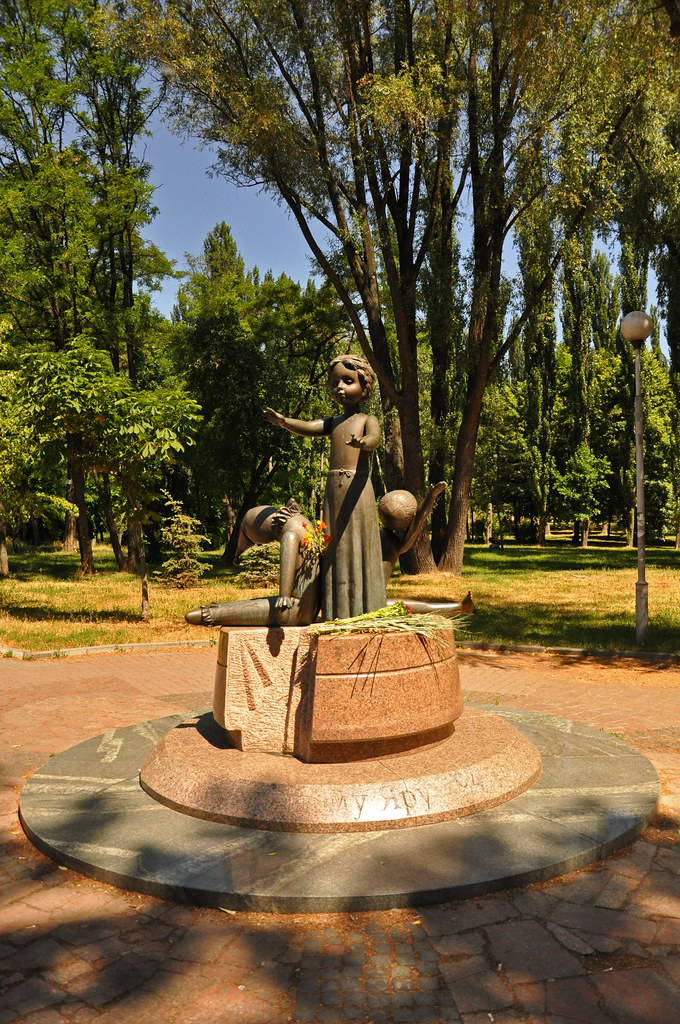
“memorial for children murdered at Babi Yar” by Anosmia is licensed under CC BY 2.0.

In Episode 2, Matt Davenport, senior History/Secondary Education major at FHSU, discusses Auschwitz Syndrome, Judeo-Bolshevism, and the Holocaust in the East. Matt also discusses his recent trip to the exhibit “Auschwitz: Not Long Ago, Not Far Away” at Union Station in Kansas City. Visit https://unionstation.org/event/auschwitz/ for more information on this exhibit.

*content warning* discussion of genocide and violence against children.

You can listen to this episode on Apple Podcasts, Spotify, Amazon Music, or wherever you get your podcasts. Make sure to subscribe so you never miss an episode.

Selected Bibliography:

Ehrenburg, Ilya and Vasily Grossman. The Complete Black Book of Russian Jewry. Translated by David Patterson. New York: Routledge, 2002.  

https://collections.ushmm.org/search/catalog/irn510762

https://collections.ushmm.org/search/catalog/irn503582

“The Bolshevik Star.” ca. 1920-1940. Blavatnik Archive, https://www.blavatnikarchive.org/item/2489.