
S2, E2- “Soundscapes of Polish Ghettos” with Matt Davenport

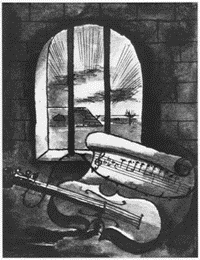
“Still Life of a Violin and Sheet of Music Behind Prison Bars by Bedrich Fritta,” 1943, United States Holocaust Memorial Museum

Episode 2 features another previous guest of Victor E, Matt Davenport. In this episode he visits with Hollie about his research titled “Music, Silence, and Violence: Soundscapes and Collective Memory of Polish Ghettos.” Matt unpacks the ways in which music, silence, and the sounds of violence shaped everyday interactions of Jewish people in the ghettos as well as the role of the soundscapes in the way in which survivors remember the ghettos.

Matt’s previous episode on Victor E.’s first season also discusses the Holocaust, with a focus on the Holocaust in the East. Check that out here: https://wordpress.com/post/victorehistory.com/71

You can find Matt’s episodes on Apple Podcasts, SpotifyAmazon Music, or any of the major podcast platforms. Make sure to subscribe so you never miss an episode. While you’re there, give us a review. Let us know what you like and share widely!

Selected Bibliography:

Bruk, Selene. “Oral History Interview with Selene Bruk.” Interviewed by Arnold Band. March 6, 1983. The Jeff and Toby Herr Oral History Archive. United States Holocaust Memorial Museum. https://collections.ushmm.org/search/catalog/irn503582.

Carolyn Birdsall, Nazi Soundscapes: Sound, Technology and Urban Space in Germany, 1933-1945, Amsterdam: Amsterdam University Press, 2012.

Flam, Gila. Singing for Survival: Songs of the Lodz Ghetto 1940-45. Chicago: University of Illinois Press, 1992.

Nowak, Anja. Violent Space: The Jewish Ghetto in Warsaw. Bloomington: Indiana University Press, 2023. 

Songs mentioned in the episode:

Our Town is Burning

Es Brent

Are you interested in a history degree? We have online and on campus B.A. programs and we also have online and on campus M.A. programs in history or public history. Learn more at https://www.fhsu.edu/history/academic-program

S5, E8- “The Orphan Train” with Joanna Lockwood

In the last episode of the season, Joanna Lockwood, History Masters Student at FHSU, joins Hollie Marquess to discuss the orphan train. Joanna explains how and why the orphan train began, the experiences faced by orphan train riders on their journey and in their new homes, and modern memorialization efforts. Joanna’s great-grandfather, George Lockwood, was an orphan train rider at just six years old.

You can find this episode on Apple Podcasts, SpotifyAmazon Music, or any of the major podcast platforms. Make sure to subscribe so you never miss an episode. While you’re there, give us a review. Let us know what you like and share widely!

Selected Bibliography:

Primary Sources

Johnson, Mary Ellen. Orphan Train Riders: Their Own Stories. Vol. 1. Wever, IA: Quixote Press, 1992. (This is just the first of a six-volume collection compiled by Mary Ellen Johnson and the OTHSA organization).

Secondary Sources

The American Experience: The Orphan Trains. Produced and Directed by Janet Graham and Edward Gray. Crystal City, VA: PBS, 1995. https://www.pbs.org/wgbh/americanexperience/films/orphan/#cast_and_crew.

Aviles, Donna Nordmark. Orphan Train to Kansas. Shelbyville, KY: Wasteland Press, 2018

Holt, Marilyn Irvin. The Orphan Trains: Placing Out in America. Lincoln, NE: University of Nebraska Press, 1992.

Kidder, Clark. Emily’s Story: The Brave Journey of an Orphan Train Rider. Self-published, CreateSpace Publishing, 2007.

Langsam, Miriam Z. Children West: A History of the Placing-Out System of the New York Children’s Aid Society, 1853-1890. Madison: State Historical Society of Wisconsin for Department of History, University of Wisconsin, 1964.

Are you interested in a history degree? We have online and on campus B.A. programs and we also have online and on campus M.A. programs in history or public history. Learn more at https://www.fhsu.edu/history/academic-program