Season 7, Episode 1 “The Satanic Panic and Dungeons and Dragons” with Tirzah Howery

Lego Dungeons and Dragons – Look we found a treasure!” by Marco Hazard is licensed under CC BY-SA 2.0.

Victor E. History is back for its seventh season and in this first episode, Hollie is joind by Junior History and English Literature major Tirzah Howery to discuss the role of Dungeons and Dragons in The Satanic Panic. Tirzah, a long time D&D player unpacks the beginnings of the Satanic Panic and how media, and especially role playing games like D&D quickly became a target of nervous suburbanites who thought their children were demonic.

Her research uncovered fascinating source material. In the episode, she discusses this image from Turmoil in the Toybox depicting a less than scientific “study” about the influence of media on a child’s mind.

You can find this episode on Apple Podcasts, SpotifyAmazon Music, or any of the major podcast platforms. Make sure to subscribe so you never miss an episode. While you’re there, give us a review. Let us know what you like and share widely!

Selected Bibliography:

Dear, William. The Dungeon Master: The Disappearance of James Dallas Egbert III. Houghton Mifflin Company, 1984.

Jaffe, Rona. Mazes and Monsters. Delacorte Press, 1981.

Phillips, Phil. Turmoil in the Toybox. Starburst, Inc., 1986

Pulling, Pat. The Devil’s Web: Who Is Stalking Your Children For Satan? Huntington House, Inc., 1989.

Laycock, Joseph P. Dangerous Games: What the Moral Panic over Role-Playing Games Says about Play, Religion, and Imagined Worlds. University of California Press, 2015.

Are you interested in a history degree? We have online and on campus B.A. programs and we also have online and on campus M.A. programs in history or public history. Learn more at https://www.fhsu.edu/history/academic-program

Season 7 coming soon!

Season 7 begins February 17 with an episode about The Satanic Panic and Dungeons and Dragons. This season, Victor E History will cover patent medicines for male baldness in the 19th century, the Lizzie Borden trial, women in Japanese Internment camps, and more! In the meantime, catch up on any episodes you’ve missed or re-listen to a favorite.

Season 6, Episode 7- “John F. Kennedy’s 1959 Visit to Hays, Kansas” with Randy Gonzales”

Massachusetts senator John F. Kennedy sits at a banquet table with Sixth District chairman Norbert Dreiling of Hays at a fundraising dinner on Nov. 20, 1959. With them are students from Girls Catholic High School, who were servers at the banquet. Courtesy photo

In the last episode of this season, Hollie is joined by history department alum Randy Gonzales. Randy is an expert on J.F.K.’s 1959 visit to Hays, KS. Kennedy’s visit to Hays included a stop at the radio station, a news conference at Fort Hays State University (home of Victor E. Tiger and Victor E. History!), a parade, and a banquet.

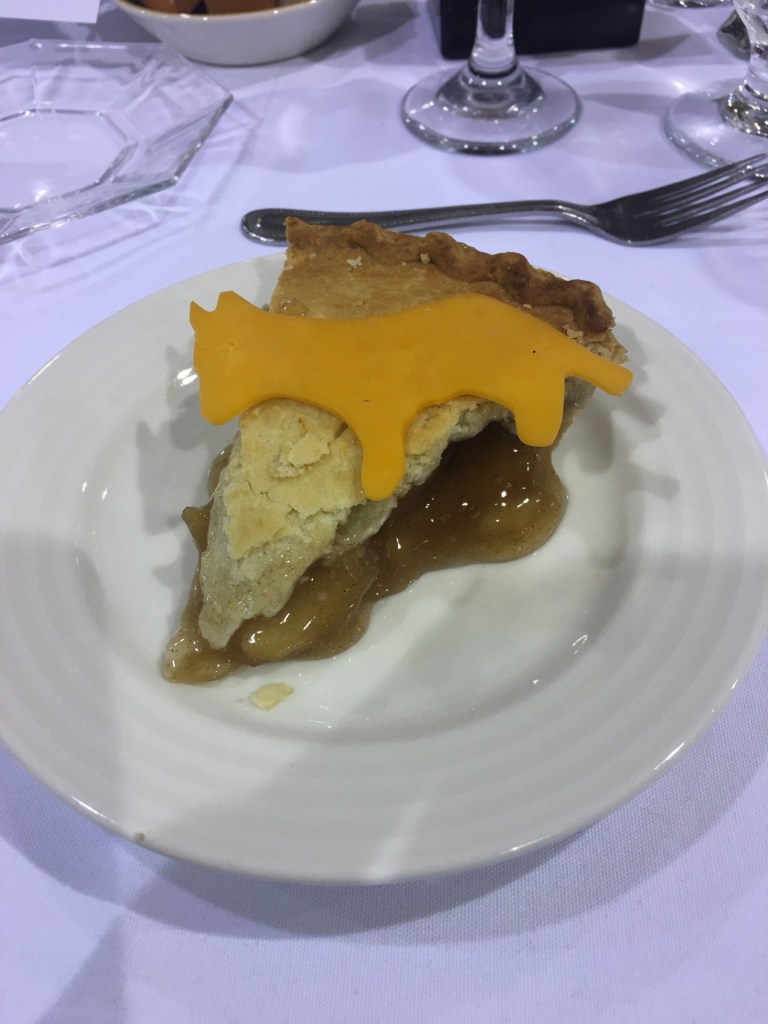
At the banquet, guests had Apple Pie ala Democrat for dessert. Randy shared this photograph from his Apple Pie ala Democrat at the banquet held in 2019 that was a recreation of the 1959 event.

Randy recently worked to get a plaque put on the wall of the FHSU Memorial Union to commemorate Kennedy’s visit to Fort Hays.

Randy earned his M.A. in history at FHSU and wrote his thesis on Kennedy’s visit to Hays.

Are you interested in a history degree? We have online and on campus B.A. programs and we also have online and on campus M.A. programs in history or public history. Learn more at https://www.fhsu.edu/history/academic-program
S6, E6 “The 1958 Federal Switchblade Ban” with Dr. Jason Barr

Dr. Jason Barr, FHSU History M.A. student, joins Hollie Marquess to discuss the 1958 Federal Switchblade Ban. Jason explores the cultural setting of the 1940s and 50s, including perceptions of race and juvenile delinquency, that led to Public Law 85-623. Jason also discusses popular media like films, novels, and magazine articles that led to ideas about who was using switchblades and how, creating a frenzy about teen gangs in the era.

You can find this episode on Apple Podcasts, SpotifyAmazon Music, or any of the major podcast platforms. Make sure to subscribe so you never miss an episode. While you’re there, give us a review. Let us know what you like and share widely!

Selected Bibliography:

Athanas, Verne. “Switchblade.” Saturday Evening Post. 1958, 231 (10), 24–50. https://search-ebscohost-com.ezproxy.fhsu.edu/login.aspx?direct=true&db=aph&AN=19537375&site=ehost-live&scope=site.

Crowther, Bosley. “The Screen: ‘Blackboard Jungle:’ Delinquency Shown in Powerful Film.” New York Times, March 21, 1955, 21. https://timesmachine.nytimes.com/timesmachine/1955/03/21/93731664.html.

“It’s Time to Disarm Switch-Blade-Toting Juvenile Hoodlums.” July 12, 1958. Saturday Evening Post. 231 (2), 10. https://search-ebscohost-com.ezproxy.fhsu.edu/login.aspx?direct=true&db=ulh&AN=19533675&site=ehost-live&scope=site.

Wertham, Fredric. Seduction of the Innocent: The Influence of Comic Books on Today’s Youth. New York: Rinehart and Company, 1955.

Are you interested in a history degree? We have online and on campus B.A. programs and we also have online and on campus M.A. programs in history or public history. Learn more at https://www.fhsu.edu/history/academic-program

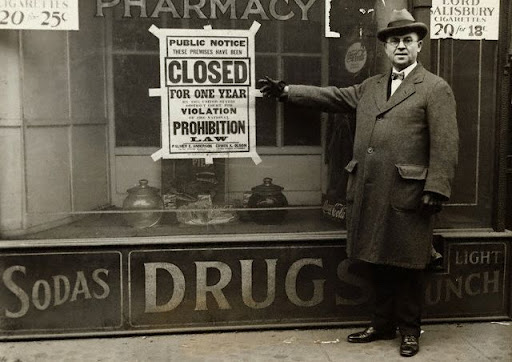
S6, E5-“Resistance to Cannabis Prohibition, 1930-1945” with Dr. Emory Wilder

In episode 5, Dr. Emory Wilder, FHSU Masters student joins Hollie to discuss “Serpents” and “Vipers” and the resistance to cannabis prohibition from 1930-1945. Dr. Wilder covers cannabis in patent medicines, cannabis as a muse in jazz music, and the circumstances that led to discourse on a federal ban.

You can find this episode on Apple Podcasts, SpotifyAmazon Music, or any of the major podcast platforms. Make sure to subscribe so you never miss an episode. While you’re there, give us a review. Let us know what you like and share widely!

Selected Bibliography:

Anslinger, Harry J. “Marijuana, Assassin of Youth.” Reader’s Digest (1938).
https://www.druglibrary.org/schaffer/history/e1930/mjassassinrd.htm.

Chasteen, John Charles. Getting High: Marijuana in World History. Lanham: Rowman and Littlefield, 2022. ProQuest Ebook Central.

Cohen, Michael M. “Jim Crow’s Drug War: Race, Coca Cola, and the Southern Origins of Drug Prohibition.” Southern Cultures 12, no. 3 (Fall 2006): 55-79.
https://www.jstor.org/stable/26391000.

Smith, Stuff, and the Onyx Club Boys. “If You’re a Viper.” March 13, 1936. Audio
recording. 00:03:20. hTps://soundcloud.com/stella-blue-1/youre-a-viper-stuff-smith-and.

Webb, Chick, and His Orchestra. “When I Get Low I Get High.” April 7, 1936. Audio recording. 00:02:29. https://archive.org/details/JV-10685-1936-
Qmepcnc4nyXcKRPmrZTHeJGTKJ9GTuBdXVxd7JbqxZMi3e.mp3.

Are you interested in a history degree? We have online and on campus B.A. programs and we also have online and on campus M.A. programs in history or public history. Learn more at https://www.fhsu.edu/history/academic-program

S6, E4-  “Hoover, the Flood of 1927, and the African American Turn from the Republican Party” with Will Amos

In this episode, Will Amos, undergraduate history major, chats with Hollie Marquess about the 1927 Mississippi River Flood. This devastating flood caused hundreds of deaths and displaced thousands from homes. Will discusses the natural disaster, Herbert Hoover’s coordination of relief efforts, and the reasons in which this flood marked the African American turn from the Republican Party.

You can find this episode on Apple Podcasts, SpotifyAmazon Music, or any of the major podcast platforms. Make sure to subscribe so you never miss an episode. While you’re there, give us a review. Let us know what you like and share widely!

Selected Bibliography:

Barry, John M. Rising Tide: The Great Mississippi Flood of 1927 and How It Changed America. New York: Touchstone, 1998.

Cobb, James C. The Most Southern Place on Earth: The Mississippi Delta and the Roots of Regional Identity. Oxford: Oxford University Press, 1994.

Percy, William Alexander. Lanterns on the Levee: Recollections of a Planter’s Son. New York: Alfred A. Knopf, 1941.

Randolph, Ned. “River Activism, ‘Levees-Only’ and the Great Mississippi Flood of 1927,” Media and Communication 6, no. 1 (February 2018): 43-51.

Are you interested in a history degree? We have online and on campus B.A. programs and we also have online and on campus M.A. programs in history or public history. Learn more at https://www.fhsu.edu/history/academic-program
S6, E3 “Sensory Interactions in Finnish Death Customs”

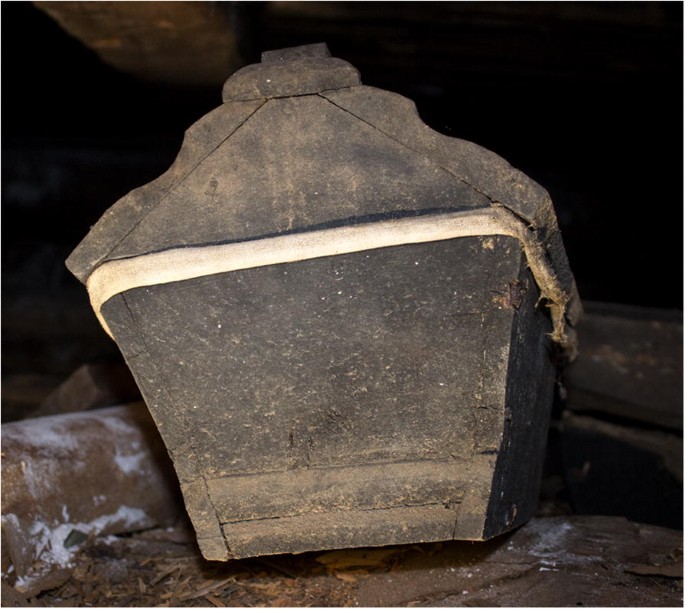
FHSU History M.A. student Starla Rajavouri discusses Finnish death customs with Hollie Marquess. Starla focuses on the sensorial aspects of preparing the body of the deceased, burial practices, rites and customs to prevent returning spirits, and the lament traditions. 

You can find this episode on Apple Podcasts, SpotifyAmazon Music, or any of the major podcast platforms. Make sure to subscribe so you never miss an episode. While you’re there, give us a review. Let us know what you like and share widely!

Selected Bibliography:

Koski, Kaarina. “Conceptual Analysis and Variation in Belief Tradition: A Case of Death-Related Beings.” Electronic Journal of Folklore 38 (2008): 45-66.

Lönnrot, Elias. Suomen kansan muinaisia loitsurunoja. Helsinki: Suomalaisen Kirjallisuuden Seuran, 1880; reprint, Project Gutenberg, 2015. https://www.gutenberg.org/ebooks/48751.

Suomen Kansan Vanhat Runot (SKVR). Finnish Literature Society. Available online: http://skvr.fi.

Tolbert, Elizabeth. “Women Cry with Words: Symbolization of Affect in the Karelian Lament.” Yearbook for Traditional Music 22 (1990): 80-105. https://doi.org/10.2307/767933.

Are you interested in a history degree? We have online and on campus B.A. programs and we also have online and on campus M.A. programs in history or public history. Learn more at https://www.fhsu.edu/history/academic-program

S2, E2- “Soundscapes of Polish Ghettos” with Matt Davenport

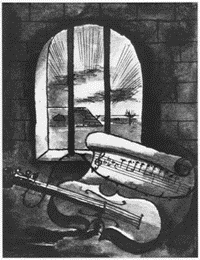
“Still Life of a Violin and Sheet of Music Behind Prison Bars by Bedrich Fritta,” 1943, United States Holocaust Memorial Museum

Episode 2 features another previous guest of Victor E, Matt Davenport. In this episode he visits with Hollie about his research titled “Music, Silence, and Violence: Soundscapes and Collective Memory of Polish Ghettos.” Matt unpacks the ways in which music, silence, and the sounds of violence shaped everyday interactions of Jewish people in the ghettos as well as the role of the soundscapes in the way in which survivors remember the ghettos.

Matt’s previous episode on Victor E.’s first season also discusses the Holocaust, with a focus on the Holocaust in the East. Check that out here: https://wordpress.com/post/victorehistory.com/71

You can find Matt’s episodes on Apple Podcasts, SpotifyAmazon Music, or any of the major podcast platforms. Make sure to subscribe so you never miss an episode. While you’re there, give us a review. Let us know what you like and share widely!

Selected Bibliography:

Bruk, Selene. “Oral History Interview with Selene Bruk.” Interviewed by Arnold Band. March 6, 1983. The Jeff and Toby Herr Oral History Archive. United States Holocaust Memorial Museum. https://collections.ushmm.org/search/catalog/irn503582.

Carolyn Birdsall, Nazi Soundscapes: Sound, Technology and Urban Space in Germany, 1933-1945, Amsterdam: Amsterdam University Press, 2012.

Flam, Gila. Singing for Survival: Songs of the Lodz Ghetto 1940-45. Chicago: University of Illinois Press, 1992.

Nowak, Anja. Violent Space: The Jewish Ghetto in Warsaw. Bloomington: Indiana University Press, 2023. 

Songs mentioned in the episode:

Our Town is Burning

Es Brent

Are you interested in a history degree? We have online and on campus B.A. programs and we also have online and on campus M.A. programs in history or public history. Learn more at https://www.fhsu.edu/history/academic-program

Season 6, Episode 1- “1950s North Carolina Women’s Prison Riots” with Chelsea Kiefer

Photo of a Christmas program in the Raleigh Women’s Prison. Chelsea discusses this image in the episode.

Season six begins with a familiar guest, Chelsea Kiefer. Chelsea joins Hollie to discuss “When the Powerless Stand Up: Social Dynamics in 1950s North Carolina Women’s Prison Riots.” She discusses riots that happened in 1954 and 1956 that occurred in the women’s prison in Raleigh, North Carolina. These riots, both motivated by very different circumstances, demonstrate that the women felt that rioting was the only way they could create change. However, the riots resulted in even less power for these women in an era before the major inmate rights movements.

You can find this episode on Apple Podcasts, SpotifyAmazon Music, or any of the major podcast platforms. Make sure to subscribe so you never miss an episode. While you’re there, give us a review. Let us know what you like and share widely!

Selected Bibliography:

“18 Women Inmates Riot.” The New York Times, September 23, 1956.
https://timesmachine.nytimes.com/timesmachine/1956/09/23/95810601.html?pageNumber=59.

Alexander, Michelle. The New Jim Crow: Mass Incarceration in the Age of Colorblindness. New York: New Press, 2020.

Faith, Karlene. Unruly Women: The Politics of Confinement and Resistance. New York: First Seven Stories Press, 2011.

“History of NC Prisons.” North Carolina Department of Public Safety.
https://www.doc.state.nc.us/admin/page1.htm.

“Prison Quiet After Riot Over Death of Tied Girl.” Norfolk Journal and Guide, August 28, 1954. The State Library of North Carolina. Raleigh, NC.

Book recommended by Hollie in the episode: https://www.hughryan.org/house-of-d

Are you interested in a history degree? We have online and on campus B.A. programs and we also have online and on campus M.A. programs in history or public history. Learn more at https://www.fhsu.edu/history/academic-program
Season six coming soon!

Victor E. History is back in August with its sixth season! This season offers a wide variety of topics from our online and campus students as well as an alum. This season’s episodes are:

Episode 1- August 26- “1950s North Carolina Women’s Prison Riots” with Chelsea Kiefer

Episode 2- September 9- “Soundscapes of Polish Ghettos” with Matt Davenport

Episode 3- September 23- “Sensory Interactions in Finnish Death Customs” with Starla Rajavouri

Episode 4- October 7- “Hoover, the Flood of 1927, and the African American Turn from the Republican Party” with Will Amos

Episode 5- October 21 “Resistance to Cannabis Prohibition, 1930-1945” with Dr. Emory Wilder

Episode 6- November 4 “The 1959 Federal Switchblade Ban” with Dr. Jason Barr

Episode 7- November 18 “John F. Kennedy’s 1959 Visit to Hays, Kansas” with Randy Gonzales

While you’re waiting, catch up on seasons one through five on Apple Podcasts, SpotifyAmazon Music, or any of the major podcast platforms. Make sure to subscribe so you never miss an episode. While you’re there, give us a review. Let us know what you like and share widely!